Noirvember
What I watched in November

Well, here we are, somehow several days into December. I’m writing this from a brewery in Springfield, Missouri, that— unbeknownst to me until I approached the building— looks like Santa vomited Christmas lights all over it. It’s rather at odds with what I want to recap today, which is my Noirvember watches. But first, here are a few movies I reviewed for my blog in November:
Put Your Soul on Your Hand and Walk
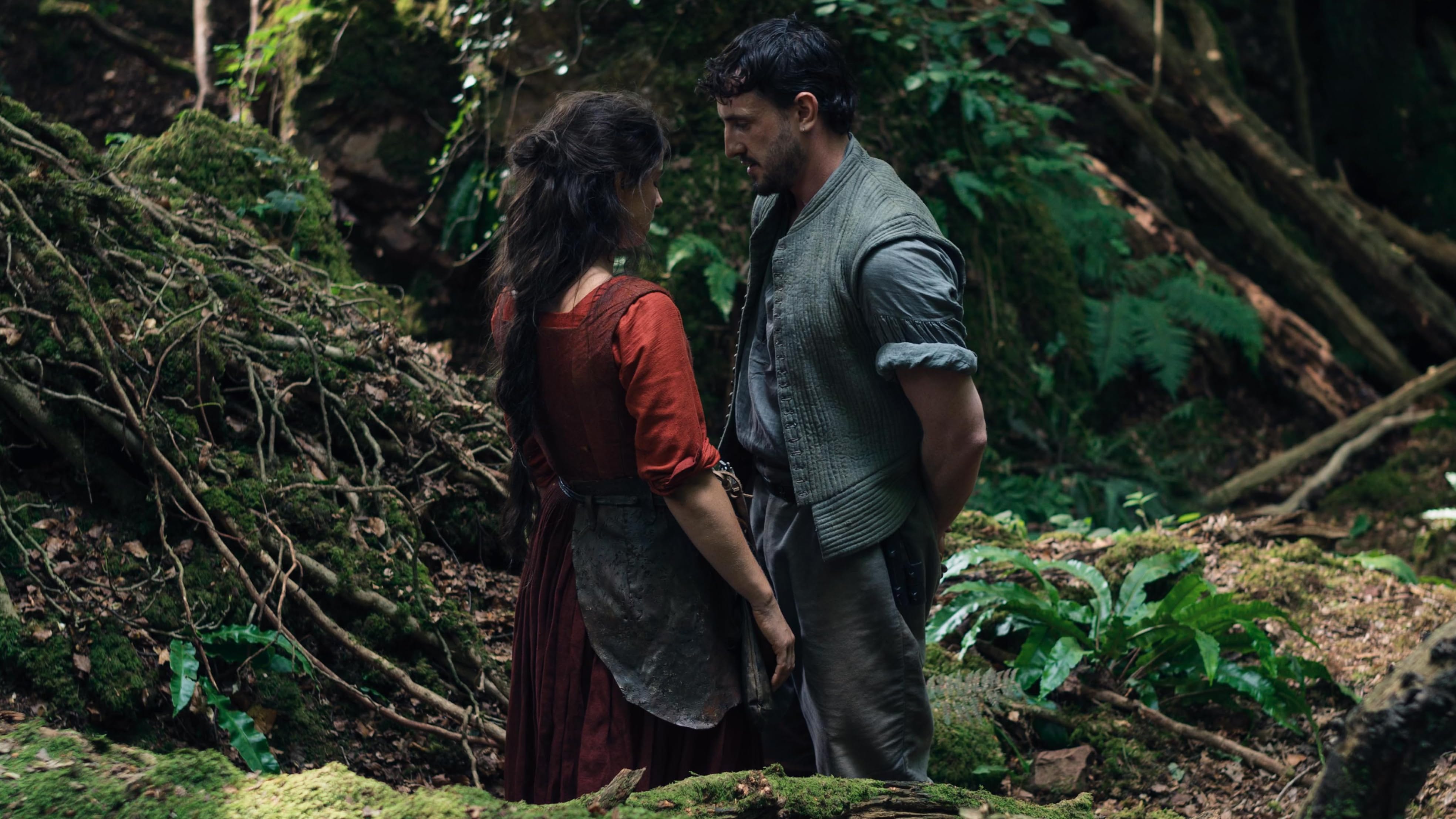
I also presented a screening of the insane 1934 pre-Code marital comedy Smarty at Arkadin Cinema & Bar. I knew the right crowd was in attendance when a reference to the famous grapefruit-smashing scene in 1931’s The Public Enemy went over like gangbusters. Weirdly, this largely unavailable movie is currently streaming on HBO Max.
Anyway, I’ve been participating in Noirvember (an annual celebration of all things film noir started by writer Marya E. Gates) for…well, a long time, but I don’t usually make a formal challenge of it. I more just watch what I can, and take it as an opportunity to check off some things that I’ve been meaning to get to for a while. This November, I watched 13 new-to-me noirs (I actually am fairly superstitious about the number 13, so I’m a little irked with myself for not cramming in one more movie, or watching one less). You can find my list of them on Letterboxd here.
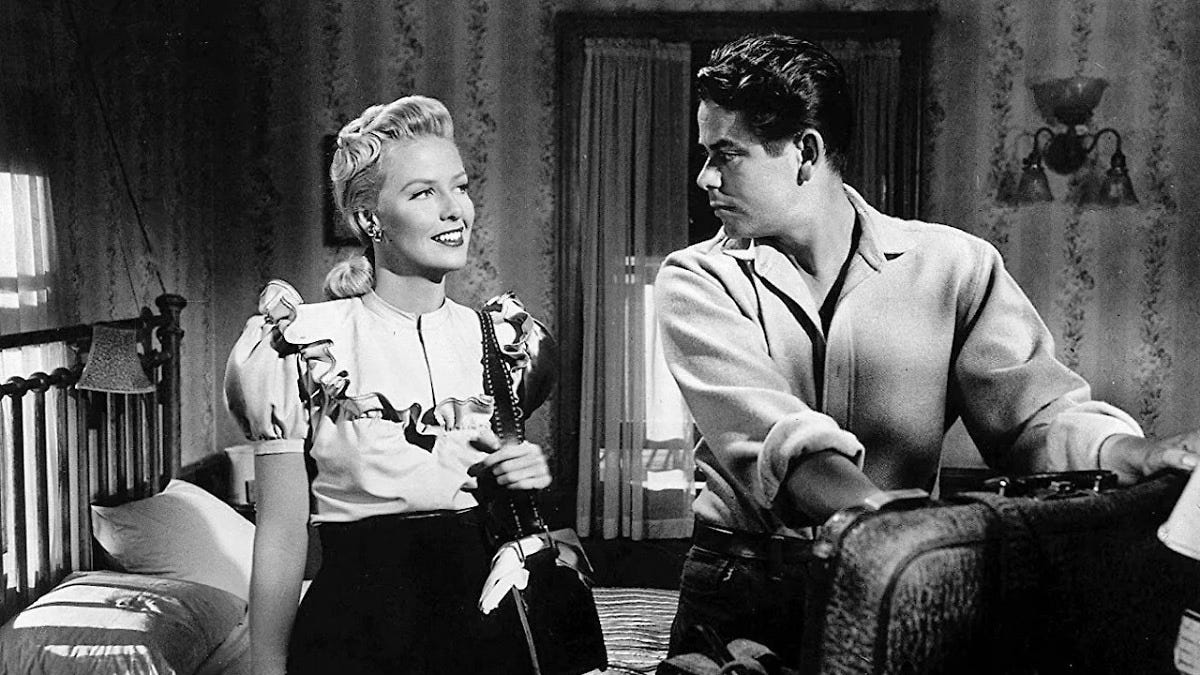
A couple of films I dug out of the void that is HBO Max: the very low-budget B The Tattooed Stranger is just over an hour long and not particularly notable outside of its New York City location shooting and the fact that the leading lady helping in the murder investigation (a woman found gruesomely blown to bits in her car) is a botanist, which is kinda neat. Scene of the Crime is a rare MGM procedural noir— not the studio, or leading man Van Johnson’s, forte, and despite dealing with some heavy topics (like crooked cops), it all registers as rather tame. I also watched the only two films in Criterion Channel’s Blackout Noir collection I hadn’t seen. These are films whose plots involve the protagonist, well, blacking out, suffering from amnesia or imbibing too much liquor or otherwise. Drunken nights are the impetus for men’s problems in 1947’s Framed and 1954’s Blackout. Of the two, I preferred the former, although their are some amusing twists in Blackout (which is directed by future Hammer Studios titan Terence Fisher) courtesy of Belinda Lee’s constant tugging of hapless Dane Clark, who may or may not have married her while under the influence. Framed had the added benefit of starring Glenn Ford, who’s always great at playing a bit swarmy while remaining sympathetic. There’s some nicely-rendered small town atmosphere (where Ford’s truck driver breaks down), but Janis Carter really runs away with the thing as the conniving femme fatale who immediately sees in Ford what she needs to fulfill her plans of robbing a bank and running off with her boyfriend (Barry Sullivan).
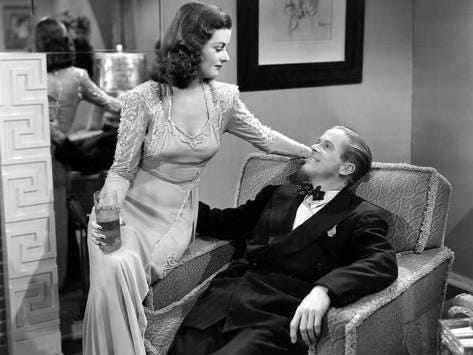
I’m a big fan of Fritz Lang’s Scarlet Street, so this year I finally dug out my Blu-ray of 1944’s The Woman in the Window, which he made the year before with the same cast. Edward G. Robinson is as vulnerable, but also quite conniving, playing a professor who gets mixed up with Joan Bennett after glimpsing her portrait in a shop window. His wife and kids are out of town, so he has a few drinks, and accompanied Bennett’s Alice home, only for the evening to end in a murder which he then must cover up from his colleagues. Bennett, who is so venomous in Scarlet Street, almost isn’t even playing a femme fatale here, at least not in the traditional sense; maybe it was just my prior knowledge of her screen persona that kept me guessing to her true motivations throughout. Throw a perfectly skeevy Dan Duryea into this inherently tense premise and this is god-tier noir, despite its rather hokey Code-mandated ending.
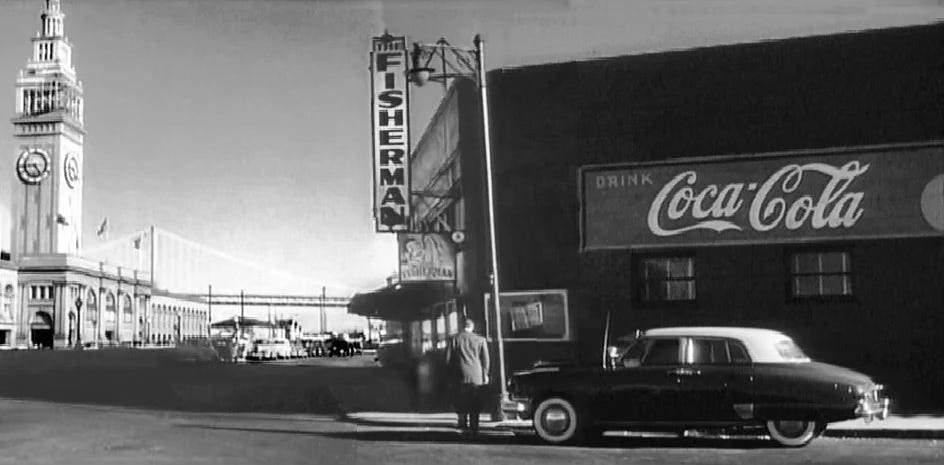
Locally, the Arkadin Cinema & Bar programmed a great series of weekly Noirvember matinees that really showcase the breadth of the genre, including the likes of the aforementioned Scarlet Street and the Ida Lupino-directed The Hitchhiker. I got to check another two films that have been on my list for a while off, and in the theater, no less. Orson Welles’ 1946 noir The Stranger sees him playing a top Nazi war criminal assuming a new identity and hiding out as a teacher in a small Connecticut town; Edward G. Robinson is the agent of the UN War Crime Commission hunting for him. Welles excelled at playing abominable people wrapped in charismatic facades, and the film’s climatic clock tower set piece is a real stunner. The breakneck D.O.A. (1950) is a real classic noir that has eluded me for a long time, and it didn’t disappoint. Edmond O’Brien stars as an accountant trying to solve his own murder using what little time he has left. Too many women, too much liquor, not enough common sense— D.O.A. (which stands for Dead on Arrival) really moves thanks to the ticking clock nature of its story, and it’s bolstered by the fact that it breaks free of studio-bound sets, utilizing loads of location shooting on the streets of San Francisco (sometimes achieved without permits, giving it a real guerrilla filmmaking feel that matches its grime) and Los Angeles, with the iconic Bradbury building, with its intricate ironwork interior, making several appearances, including in the film’s climax.
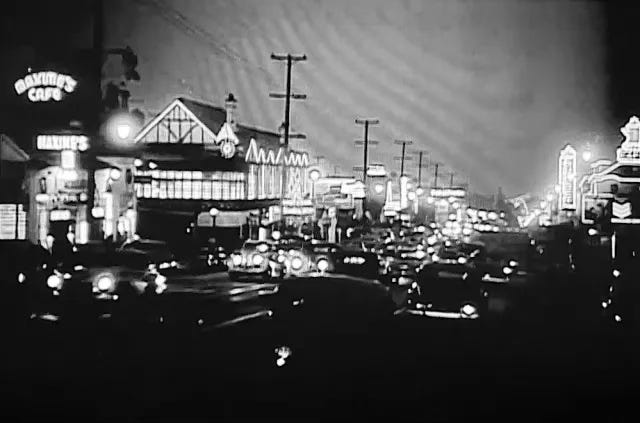
I watch expert noir historian and preservationist Eddie Mueller’s Noir Alley program on TCM every Sunday morning, so that’s how I watched three films: The Great Jewel Robber (1950, a low budget affair directed by frequent Barbara Stanwyck collaborator Peter Godfrey), Blind Spot (1947, a locked-room noir starring Chester Morris of Boston Blackie fame entertainingly playing an extremely inebriated writer who soon finds himself playing out one of his own mystery stories The Strip (1951), and Postmark for Danger (1955, alternately titled Portrait of Allison, a British knock-off of Laura that’s pretty entertaining and atmospheric nonetheless). Of these, The Strip was my favorite, not because it has an engaging story (it doesn’t), but because it breaks up this tale of a drummer who falls in with gangsters and ends up being accused of murder with some really delightful song-and-dance numbers (most notably Louis Armstrong and his band) that bring LA nightlife to light. It’s another one of the very few noirs to come out of MGM during the studio era, making its dark finale even more shocking. Mickey Rooney plays the drummer, and this movie came during his weird post-War phase when he was now too old to play Andy Hardy or star in backstage musicals opposite Judy Garland, but he was still sort of thought of a perpetual teenager, failing to fully break into conventional leading man roles. He’s earnest in The Strip for sure, even if his wild drumming is, uh, a lot.
Mueller also hosted a night of neo-noir films on TCM, so I watched two of those. 1970’s Performance, as Mueller himself admits, only very loosely qualifies as noir. I’d like another watch of this slippery movie, preferably in the theater, before I attempt to further unpack it. But directors Nicolas Roeg and Donald Cammell’s story of a gangster (James Fox) who hides out in the home of a reclusive rock star (Mick Jagger) fast turns from crime flick to an immaculately casted, hallucinatory exploration of identity crisis, and the scene where Jagger sings “Memo to Turner” is tops.
I capped off my Noirvember viewings as perfectly as I could with 1977’s The Late Show. Written and directed by Robert Benton and produced by Robert Altman, Art Carney (a few years removed from his Best Actor Oscar win for Harry and Tonto) stars as Ira Wells, an aging Los Angeles private eye who takes over the case his dead ex-partner was working on: locating the missing cat of a woman named Margo (Lily Tomlin). Of course, the mystery ends up being far more convoluted— and dangerous— than that. The exasperated Carney and eccentric, bubbly Tomlin have delightful chemistry that lightens the proceedings. The Late Show is several things— grimy portrait of glitzy Hollywood’s dirty underbelly, solid cat content— but most importantly it’s a fond tribute to the noirs of Hollywood’s past, with visual nods sprinkled in from its opening scene (the camera glides past a framed photo of The Big Sleep femme fatale Martha Vickers) and niche references to The Maltese Falcon and The Thin Man (amusing, not the famous 1934 film, but its less-successful television series starring Peter Lawford and Phyllis Kirk).